

The flag fell. The history didn't.
Its story is a reminder of something deeply American: people with an idea can build something that changes a nation. They can take risks, compete, innovate, succeed—and sometimes fail or disappear. But the mark they leave on America can last for generations.
BALTIMORE & OHIO RAILROAD (B&O)
Baltimore & Ohio Railroad — A Fallen Flag of American History
The Baltimore & Ohio Railroad, chartered in 1827, holds a remarkable place in American history. It became the nation's first common-carrier railroad and helped launch America's railroad era, connecting people, goods, communities, and markets in ways that transformed the young nation. What began with Baltimore businessmen seeking to compete for western trade eventually grew into a vast railroad system spanning thousands of miles. The B&O pioneered new technologies, engineering methods, transportation routes, and business practices while helping fuel America's industrial growth.But the B&O story also reminds us that no company, no industry, and no institution is guaranteed to last forever. After 160 years under its own corporate identity, the Baltimore & Ohio Railroad was merged into the Chessie System in 1987, and its name as an independent railroad disappeared. Much of its former network, however, continues to operate today as part of the CSX system. In railroad history, a company whose original identity has disappeared through merger, acquisition, or other changes is often called a “fallen flag.” The B&O is one of America's great fallen flags—not because its contributions disappeared, but because the company itself eventually became part of something larger.
Two Parties Three Branches
How the Constitution, Political Parties, and the American People Built the United States We Know TodAY
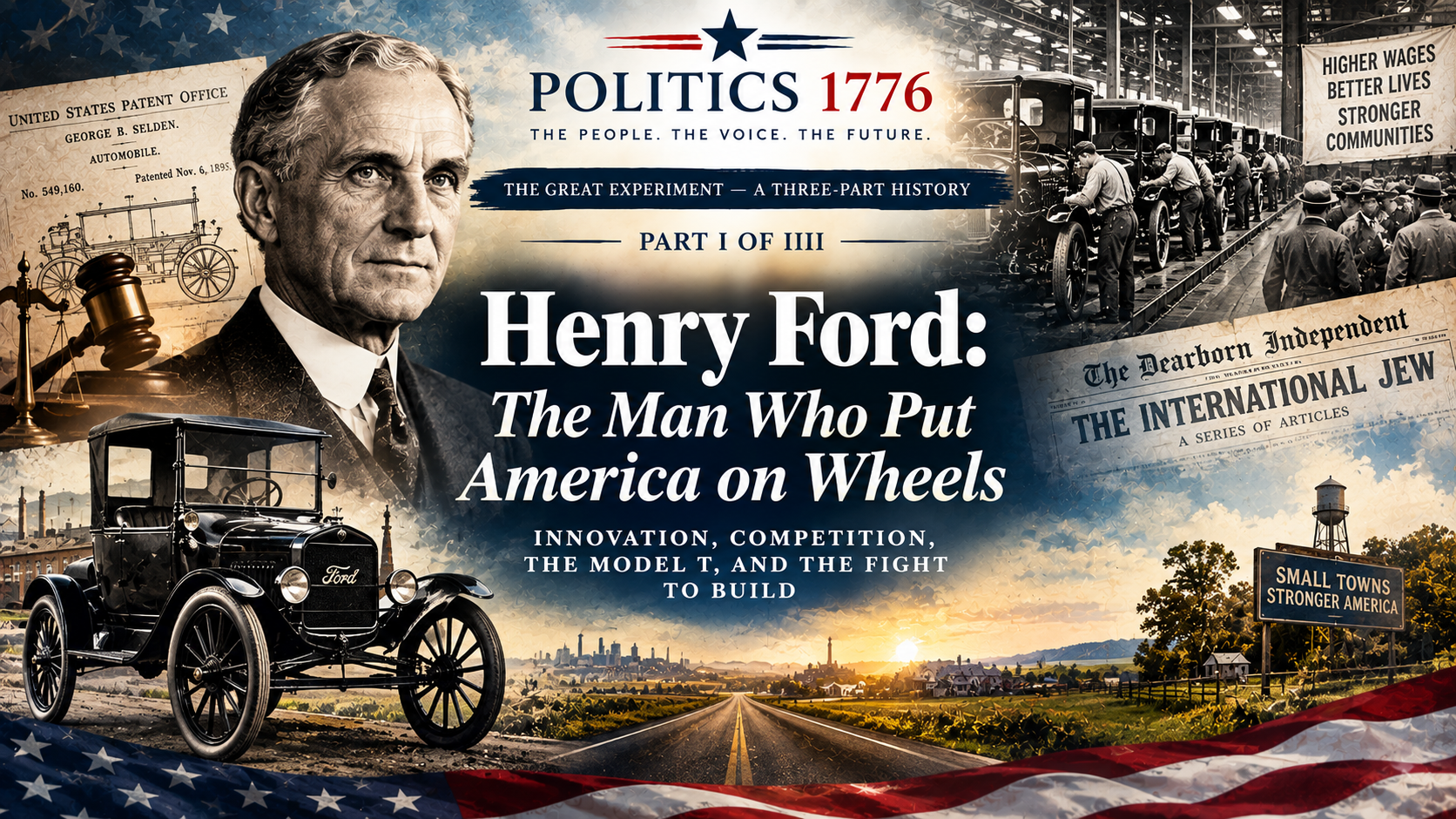
HENRY FORD: THE AMERICAN EXPERIMENT
Innovation, Competition, the Model T, and the Fight to Build THE GREAT EXPERIMENT — A THREE-PART HISTORY
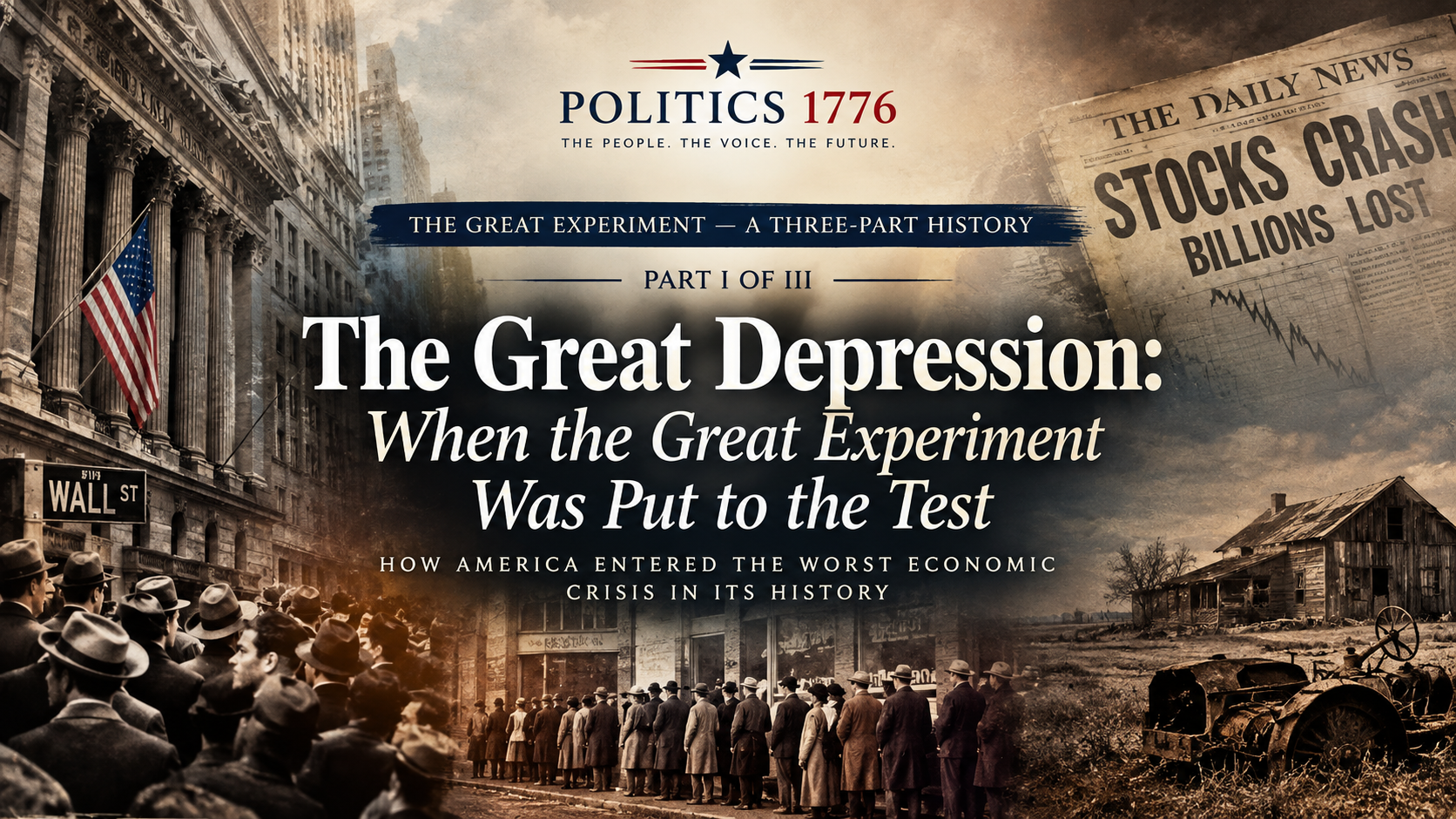
The Great Depression: PART I OF III
THE GREAT EXPERIMENT — A THREE-PART HISTORY The Great Depression: PART I OF III
THE GREAT EXPERIMENT — A THREE-PART HISTORY
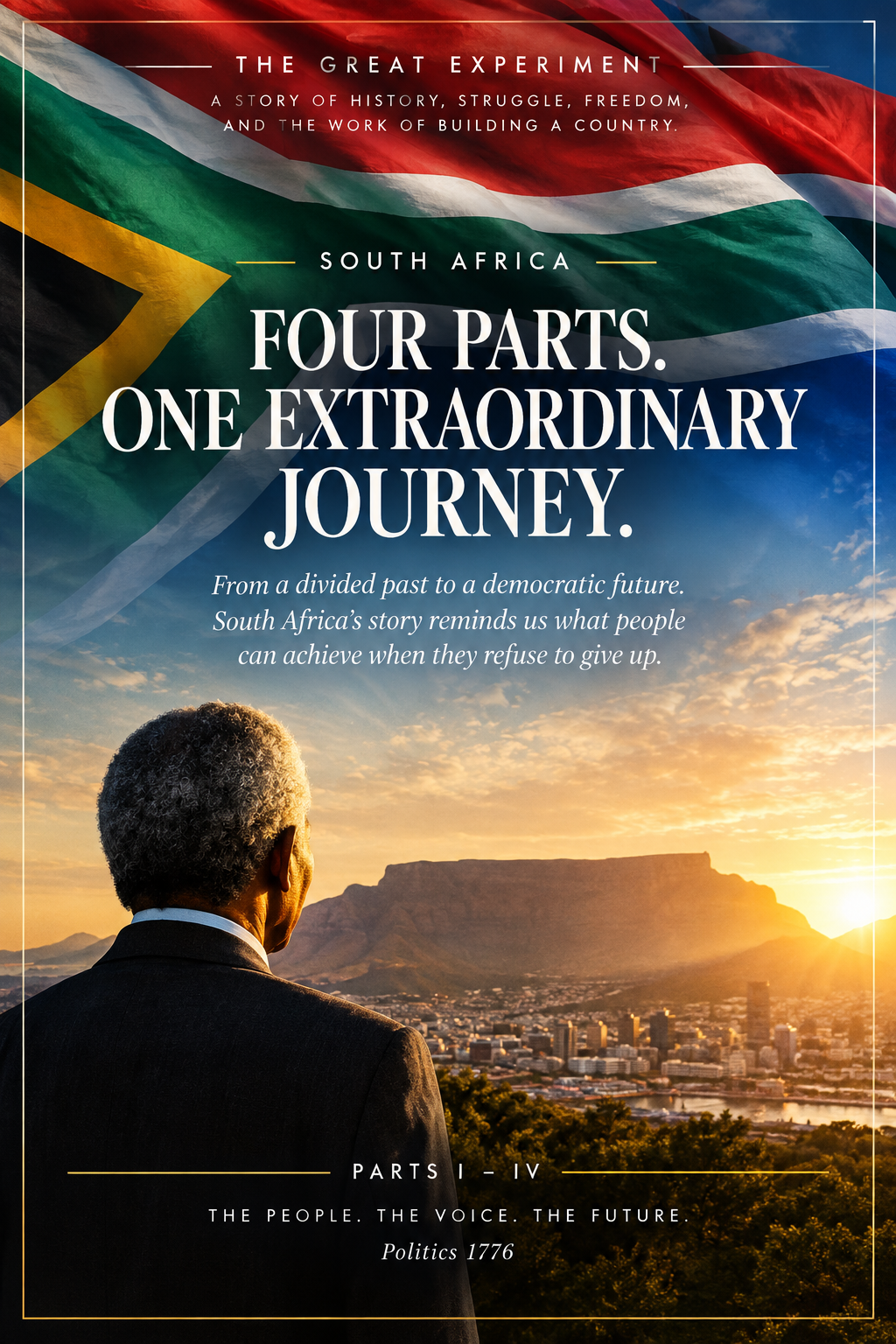
THE GREAT EXPERIMENT: SOUTH AFRICA
Where You Lived Was No Longer Simply Your Choice
The Group Areas Act of 1950 divided residential and business areas according to race.
Communities could be designated for particular racial groups.
People living in areas that were reassigned could be forced to leave.
Families could lose homes.
Businesses could lose locations.
Communities that had existed for generations could be broken apart.
The government was not merely telling people that separation was preferred.
It was using the power of law to determine where people were allowed to live.
That distinction matters.
There is a profound difference between people voluntarily choosing where they want to live and the government deciding that people of a particular racial classification cannot live in a particular place.
The Pass Laws
Movement was also controlled.
Black South Africans were subjected to pass laws that required them to carry documentation controlling their ability to enter or remain in certain areas.
The system became a powerful mechanism for controlling the movement of millions of people.
A person could live in one place and work somewhere else, but access to employment and urban areas could depend upon government permission and documentation.
The pass system was not simply a bureaucratic inconvenience.
It affected families, employment, housing, and daily life.
And eventually, opposition to these laws would help ignite one of the defining confrontations of the apartheid era.
Education Was Separated Too
The government also transformed education.
The Bantu Education Act of 1953 created a separate educational system for Black South Africans.
THIS IS MADE POSSIBLE BY PEOPLE LIKE YOU
About Politics 1776
Part One — Who We Are & What We Stand For
Speak up. Share what matters. Get involved. Make your voice heard.
Politics 1776 is a private, independent, grassroots, citizen-driven movement dedicated to putting the voice of the American people back at the center of the conversation. Our country was founded on the principle that government derives its authority from the people—not the other way around. We believe that principle matters just as much today.
Politics 1776 is a place to learn, question, discuss, share ideas, and speak up about the issues affecting our lives, our families, our communities, and our future. We believe people should feel free to ask questions, challenge the status quo, and make sure their elected representatives know what matters to them.
We don't expect everyone to agree. A healthy constitutional republic depends on people being willing to have honest conversations, consider different perspectives, and respectfully challenge one another. Our goal is not to tell people what to think, but to encourage people to think independently, participate, and use their own voice.
Politics 1776 is not affiliated with or operated by any political party, candidate, campaign, or government organization. We are a private, independent effort built around a simple idea: the people should have a voice in the government that represents them.
We don't take sides in modern party politics. We stand with the founding principles of liberty, constitutional government, representative government, and the voice of the people. We only take the Founding Fathers' side—not by adopting every political position they held, but by drawing inspiration from the principles and constitutional system they helped establish.
We encourage everyone to participate in our democracy by learning about the issues, asking questions, sharing ideas, voting, contacting elected representatives, and getting involved in their communities. Speak up, but do it responsibly. Follow the law, respect others, disagree without hatred or threats, and make your voice heard through peaceful and lawful civic participation.
This isn't about Washington speaking for the people.
It's about the people speaking for themselves.
Government works for the people—not the other way around.
Part Two — Why History Matters
Understanding Our Past. Learning From Its Lessons. Shaping Our Future.
History is more than a fascinating account of our past. It is a guide, a compass, and one of the greatest lessons we have for understanding our future. It shows us what worked, what failed, what people accomplished, and what they struggled to overcome. It helps us understand how our nation was built, why important decisions were made, and how those decisions continue to shape the country we live in today.
At Politics 1776, we believe understanding history is essential to understanding the principles upon which the United States was founded. The Founding Fathers did not simply declare independence; they debated ideas, challenged established systems of government, made difficult compromises, and worked to create a constitutional republic in which political authority would ultimately rest with the people.
Their work was not perfect, nor did they agree on every question. But the institutions they helped establish created a framework that future generations would inherit, debate, defend, and change.
History teaches us more than where we came from. It helps us understand where we are, how we got here, and what we should consider as we move forward. By studying the achievements, mistakes, struggles, and lessons of earlier generations, we can better understand the responsibilities that come with self-government.
We believe honoring the founders' legacy means more than celebrating their accomplishments. It means understanding their ideas, recognizing their disagreements, learning from the nation's successes and failures, and respecting the constitutional principles they helped establish. It means remembering that the American experiment was never intended to be the work of one generation alone.
That belief is at the heart of The Great Experiment, our historical series exploring the people, events, decisions, disagreements, and turning points that shaped the United States. From its earliest chapters through the development of the constitutional republic and the generations that followed, the series examines not only what happened, but why it mattered and what we can learn from it.
History does not give us a perfect set of instructions for every challenge we face. But it gives us something invaluable: perspective. It allows us to consider the consequences of earlier decisions, understand the reasons behind our institutions, and approach the future with greater knowledge and understanding.
The founders helped lay the foundation. History shows us what was built upon it. The responsibility for what comes next belongs to us.
Our Money Matters. Our Choices Matter. Our Voice Matters.
The People. The Voice. The Future.
Politics 1776