

THE STATUE OF LIBERTY
6/17/1885
THE STATUE OF LIBERTY
On June 17, 1885, a remarkable gift from France entered New York Harbor aboard the French ship Isère—the Statue of Liberty. Dismantled in France and packed into 214 wooden cases, Lady Liberty crossed the Atlantic in pieces, arriving before her American pedestal was even finished. France had formally presented the completed statue to the United States on July 4, 1884, but it was on that June day in 1885 that she finally arrived on American soil. More than a year later, on October 28, 1886, the statue was officially dedicated in New York Harbor. What began as a gift from one nation to another became something much larger: a symbol of liberty, opportunity, and the American experiment itself. A gift from France. A home in America. A symbol for generations. Politics 1776 — The People. The Voice. The Future.
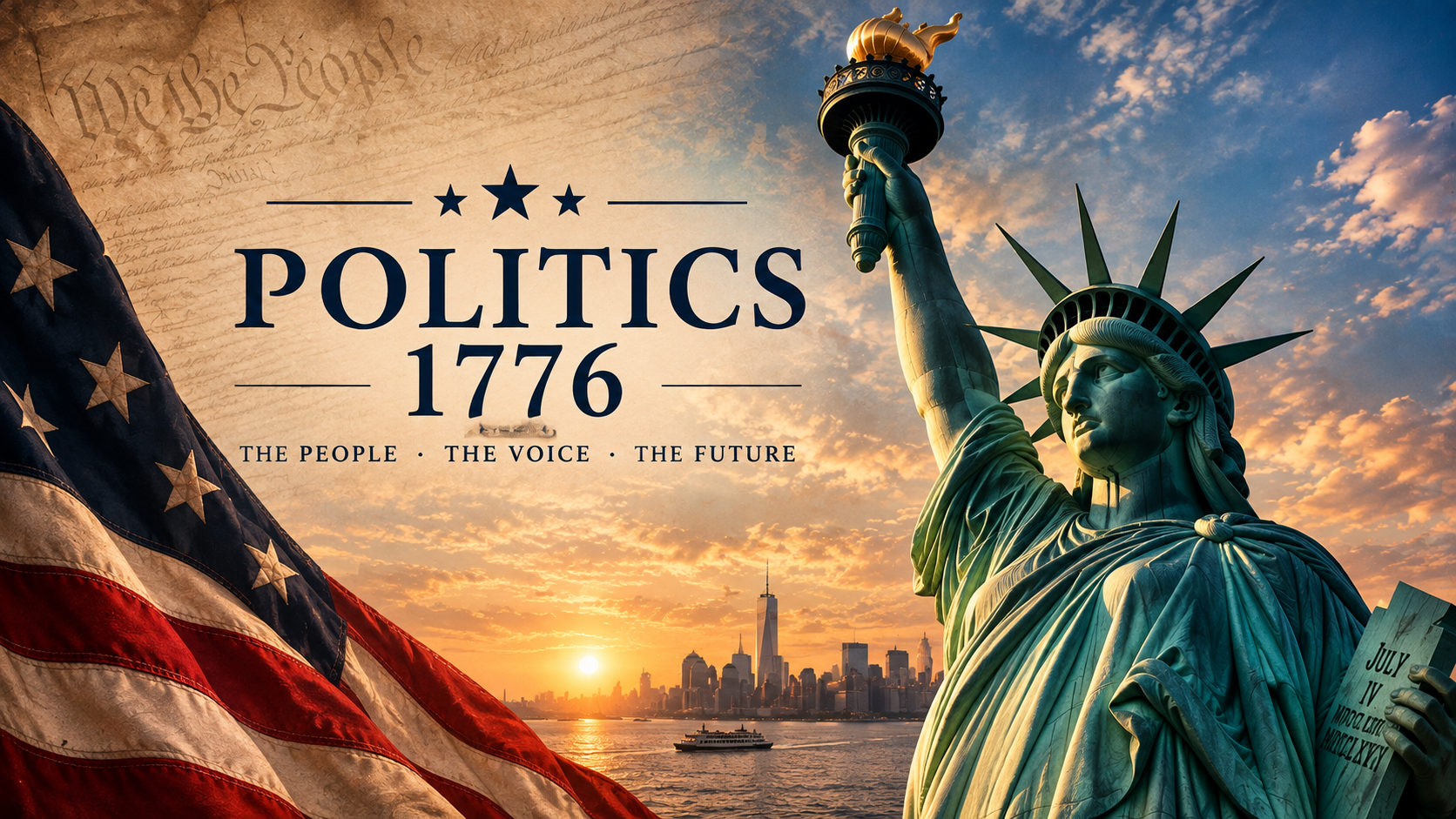
THE STATUE OF LIBERTY
A Gift From France That Became an American Symbol
When people see the Statue of Liberty standing in New York Harbor, they see one of the most recognizable symbols of America.
But Lady Liberty wasn't originally an American creation.
She was a gift from France.
The Idea
The idea began in 1865, shortly after the American Civil War.
French political thinker and abolitionist Édouard de Laboulaye proposed creating a monument celebrating liberty and the friendship between France and the United States.
French sculptor Auguste Bartholdi took on the challenge of turning that idea into something enormous.
The result would become “Liberty Enlightening the World.”
Two Countries. One Monument.
France would build the statue.
America would build the pedestal.
Engineer Alexandre-Gustave Eiffel designed the statue's internal support structure, while Americans raised the money needed to complete the pedestal.
The completed statue crossed the Atlantic in 1885, arriving in New York Harbor in pieces.
Workers reassembled her on what was then called Bedloe's Island, now Liberty Island.
October 28, 1886
President Grover Cleveland formally accepted the Statue of Liberty on behalf of the United States.
Her tablet carries a date Americans already knew:
JULY IV MDCCLXXVI
July 4, 1776.
At her feet are broken chains.
And as millions of immigrants arrived in America through New York Harbor, the statue became increasingly connected with the hope of beginning a new life in a new country.
A Gift That Became a Symbol
The Statue of Liberty began as a French idea.
France built the statue.
Americans built the pedestal.
And generations of Americans gave the monument meaning through the lives they built around it.
A gift became a symbol.
And she is still standing.
THE GREAT EXPERIMENT CONTINUES.
THE PEOPLE.
THE VOICE.
THE FUTURE.
Politics 1776
THE WHITE HOUSE & THE CAPITOL
Two Buildings. Two Branches. One American Experiment.
THE WAR OF 1812
When the Young Republic Was Tested
America had won its independence.
THE AMERICAN REVOLUTION
The War That Created a Country
Before there was a United States of America
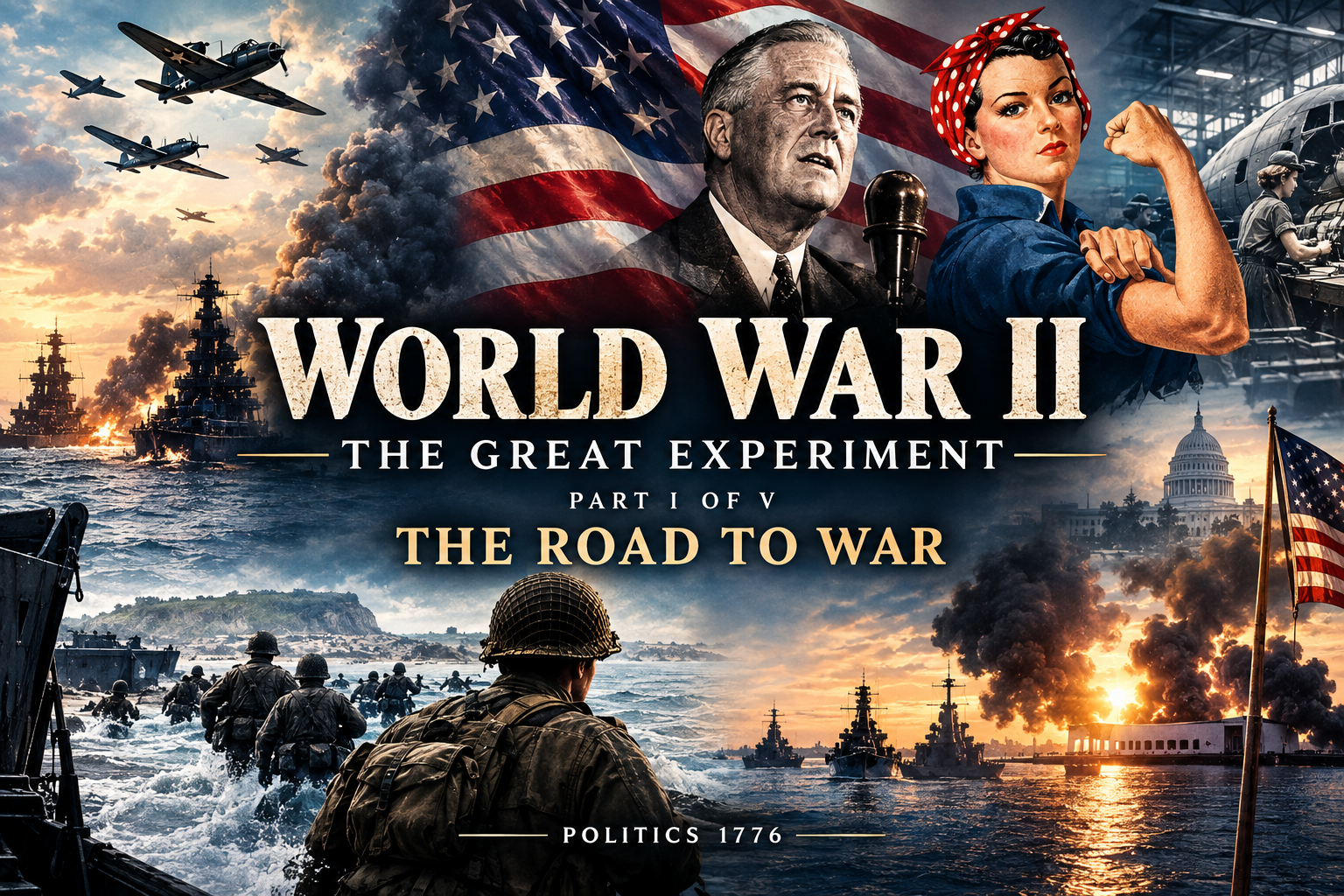
THE GREAT EXPERIMENT
WORLD WAR II
THE ROAD TO WAR
How America Went From Watching the World at War to Fighting It
THIS IS MADE POSSIBLE BY PEOPLE LIKE YOU
About Politics 1776
Part One — Who We Are & What We Stand For
Speak up. Share what matters. Get involved. Make your voice heard.
Politics 1776 is a private, independent, grassroots, citizen-driven movement dedicated to putting the voice of the American people back at the center of the conversation. Our country was founded on the principle that government derives its authority from the people—not the other way around. We believe that principle matters just as much today.
Politics 1776 is a place to learn, question, discuss, share ideas, and speak up about the issues affecting our lives, our families, our communities, and our future. We believe people should feel free to ask questions, challenge the status quo, and make sure their elected representatives know what matters to them.
We don't expect everyone to agree. A healthy constitutional republic depends on people being willing to have honest conversations, consider different perspectives, and respectfully challenge one another. Our goal is not to tell people what to think, but to encourage people to think independently, participate, and use their own voice.
Politics 1776 is not affiliated with or operated by any political party, candidate, campaign, or government organization. We are a private, independent effort built around a simple idea: the people should have a voice in the government that represents them.
We don't take sides in modern party politics. We stand with the founding principles of liberty, constitutional government, representative government, and the voice of the people. We only take the Founding Fathers' side—not by adopting every political position they held, but by drawing inspiration from the principles and constitutional system they helped establish.
We encourage everyone to participate in our democracy by learning about the issues, asking questions, sharing ideas, voting, contacting elected representatives, and getting involved in their communities. Speak up, but do it responsibly. Follow the law, respect others, disagree without hatred or threats, and make your voice heard through peaceful and lawful civic participation.
This isn't about Washington speaking for the people.
It's about the people speaking for themselves.
Government works for the people—not the other way around.
Part Two — Why History Matters
Understanding Our Past. Learning From Its Lessons. Shaping Our Future.
History is more than a fascinating account of our past. It is a guide, a compass, and one of the greatest lessons we have for understanding our future. It shows us what worked, what failed, what people accomplished, and what they struggled to overcome. It helps us understand how our nation was built, why important decisions were made, and how those decisions continue to shape the country we live in today.
At Politics 1776, we believe understanding history is essential to understanding the principles upon which the United States was founded. The Founding Fathers did not simply declare independence; they debated ideas, challenged established systems of government, made difficult compromises, and worked to create a constitutional republic in which political authority would ultimately rest with the people.
Their work was not perfect, nor did they agree on every question. But the institutions they helped establish created a framework that future generations would inherit, debate, defend, and change.
History teaches us more than where we came from. It helps us understand where we are, how we got here, and what we should consider as we move forward. By studying the achievements, mistakes, struggles, and lessons of earlier generations, we can better understand the responsibilities that come with self-government.
We believe honoring the founders' legacy means more than celebrating their accomplishments. It means understanding their ideas, recognizing their disagreements, learning from the nation's successes and failures, and respecting the constitutional principles they helped establish. It means remembering that the American experiment was never intended to be the work of one generation alone.
That belief is at the heart of The Great Experiment, our historical series exploring the people, events, decisions, disagreements, and turning points that shaped the United States. From its earliest chapters through the development of the constitutional republic and the generations that followed, the series examines not only what happened, but why it mattered and what we can learn from it.
History does not give us a perfect set of instructions for every challenge we face. But it gives us something invaluable: perspective. It allows us to consider the consequences of earlier decisions, understand the reasons behind our institutions, and approach the future with greater knowledge and understanding.
The founders helped lay the foundation. History shows us what was built upon it. The responsibility for what comes next belongs to us.
Our Money Matters. Our Choices Matter. Our Voice Matters.
The People. The Voice. The Future.
Politics 1776